
Oil and gas power our world — from the fuel in your car to the plastic in your phone case. But have you ever wondered how crude oil from deep underground turns into the gasoline we use every day?
Let’s take a simple, step-by-step journey through the oil and gas industry, from exploration to refining, and see how energy really flows through our lives.
1. Why Oil and Gas Matter
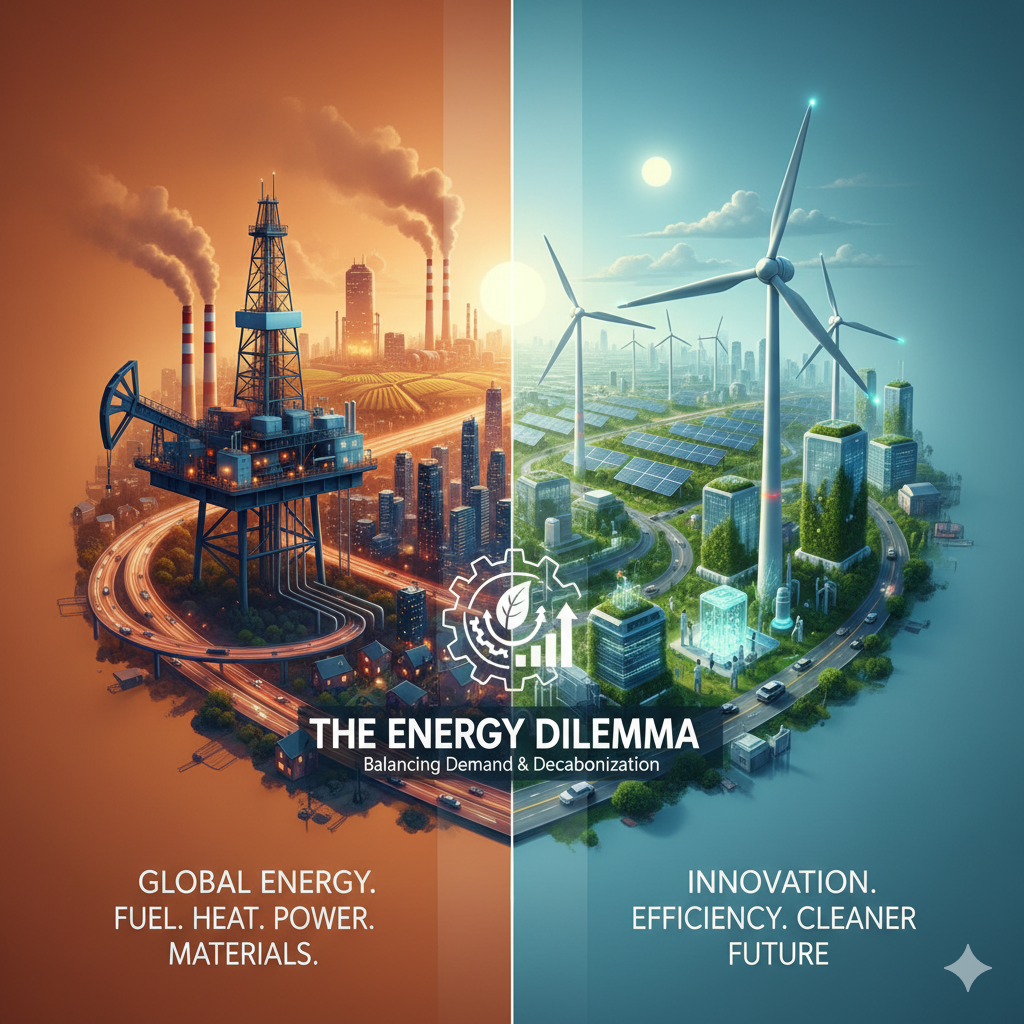
Even in today’s era of renewables, oil and gas remain the backbone of global energy. Around half of the world’s energy still comes from hydrocarbons.
They fuel transportation, heat homes, power industries, and even serve as raw materials for fertilizers, chemicals, and plastics.
Without oil and gas, modern society — as we know it — would simply stop moving.
Yet, the industry faces a big challenge: balancing the world’s growing energy demand with the need to cut carbon emissions. That’s why innovation and efficiency have become key parts of the story.
2. Exploration: Finding Hidden Energy
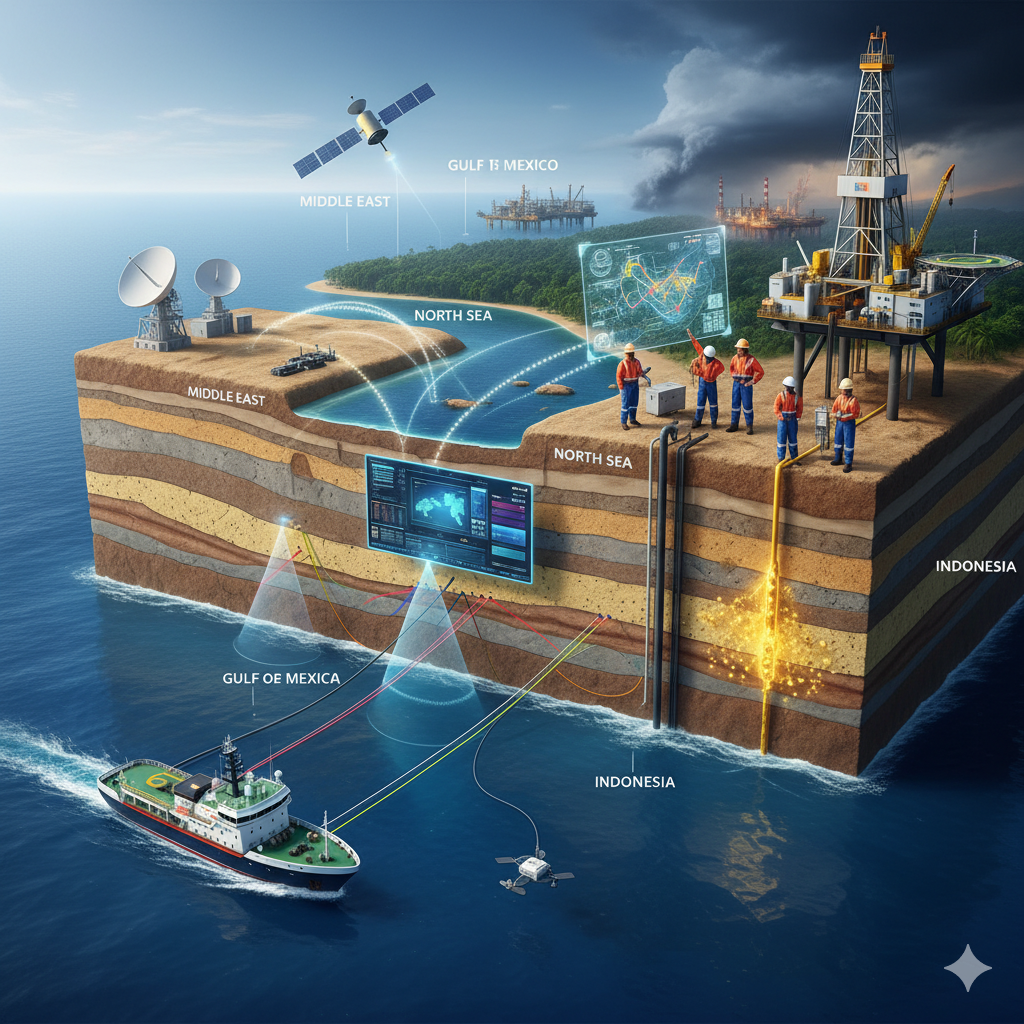
Before we can produce oil, we need to find it. This is where exploration comes in — the exciting first stage of the oil and gas journey.
Geologists and geophysicists study rock formations and use seismic surveys to look for underground structures that might contain hydrocarbons. These surveys send sound waves deep into the earth and analyze the echoes to “see” what’s below.
Once a potential site looks promising, companies drill exploration wells to test if oil or gas is really there.
In modern exploration, technology plays a huge role — from 3D imaging and AI-based mapping to satellite data. Hotspots like the Middle East, Gulf of Mexico, North Sea, and Indonesia continue to be key regions for new discoveries.
3. Drilling and Production: Extracting Oil from the Earth
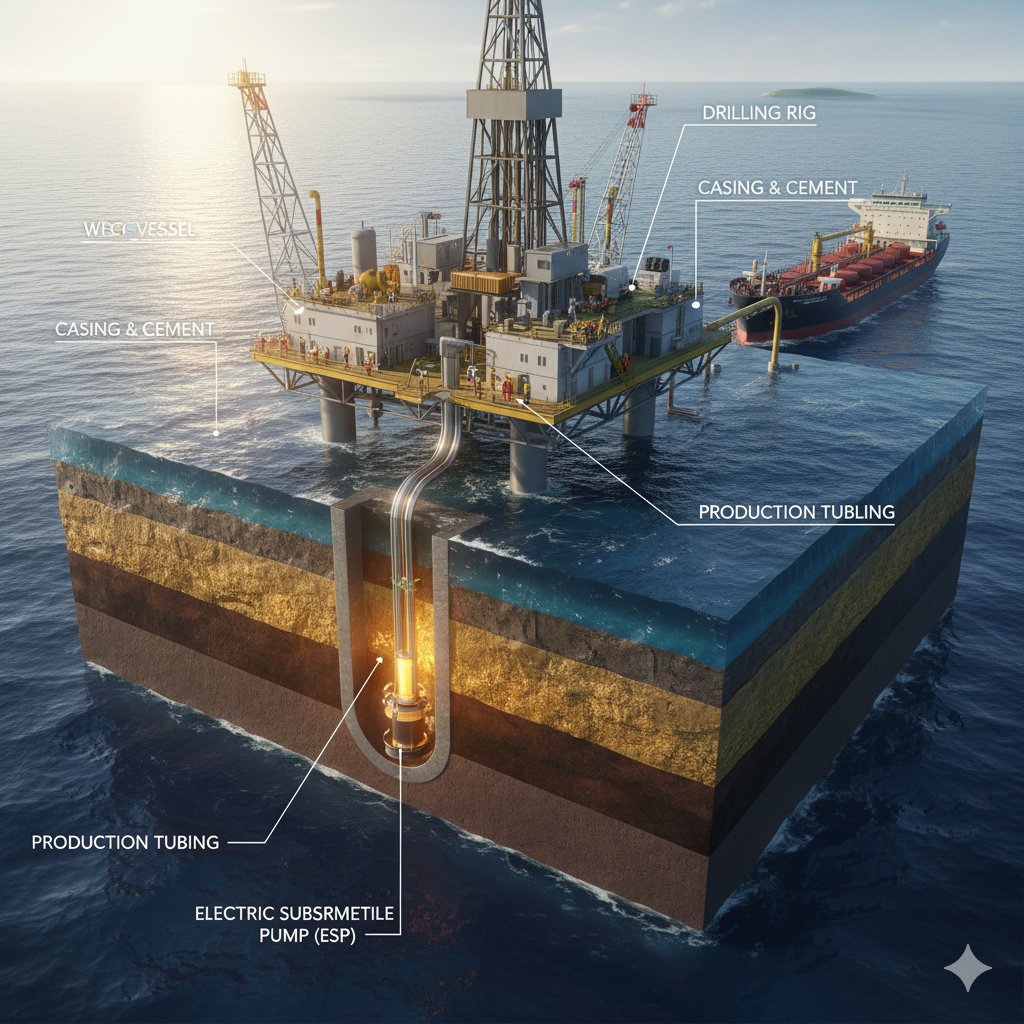
After confirming that oil or gas exists underground, it’s time to drill production wells.
A drilling rig creates a deep hole that reaches the reservoir — sometimes more than 3,000 meters below the surface. Steel pipes called casings are placed to protect the well, and cementing seals them in place.
Once the well reaches the oil zone, it’s “completed” with equipment that allows controlled production. But here’s the catch — not all wells flow naturally.
In many cases, engineers use artificial lift systems to help bring oil to the surface. One of the most common methods is the Electric Submersible Pump (ESP) — a powerful pump installed deep inside the well that pushes oil upward efficiently.
ESP systems are widely used in onshore and offshore fields around the world for their high reliability and large production capacity.
4. Transportation: Moving Oil and Gas to Refineries
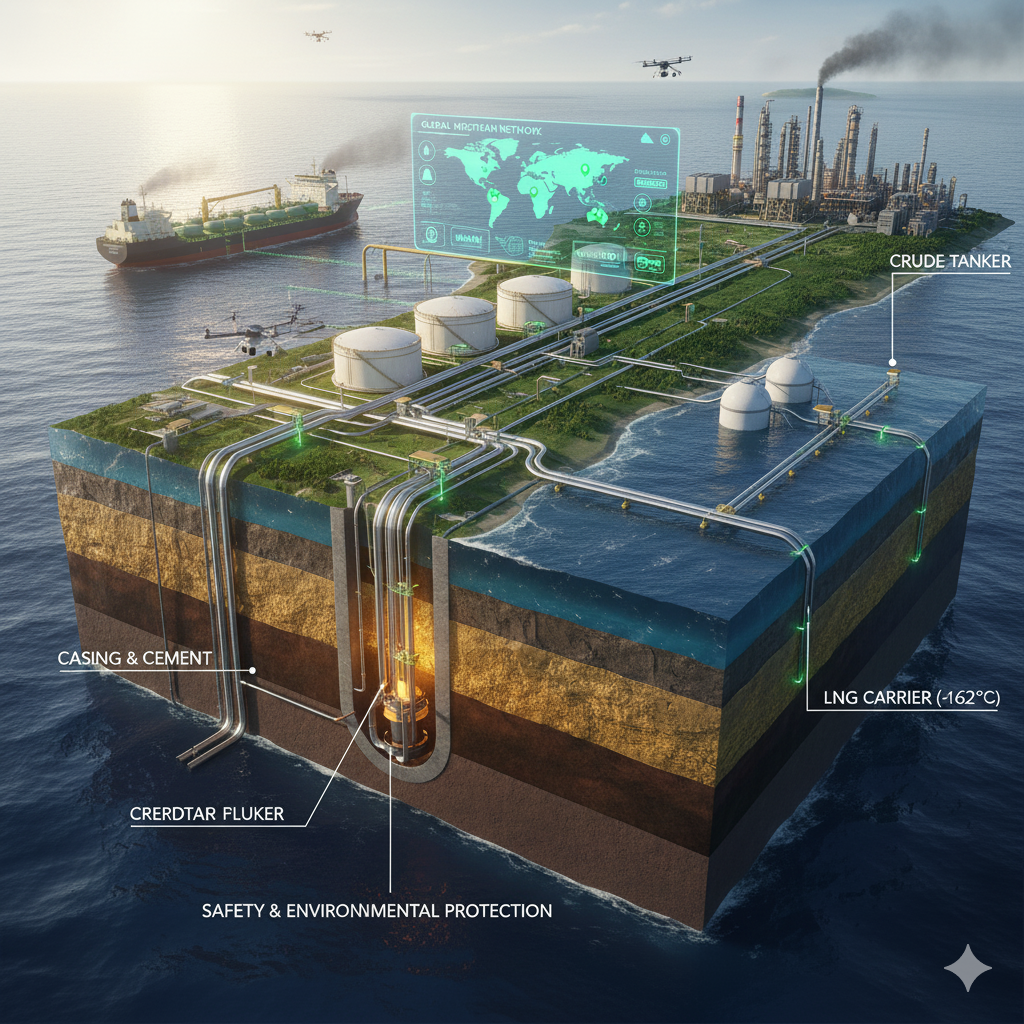
Once produced, crude oil and natural gas need to travel — often thousands of kilometers — before they can be refined or sold.
This stage is called midstream operations, and it involves a complex network of pipelines, tanker ships, and storage terminals.
-
- Pipelines are the most common and efficient way to move oil and gas over land.
-
- Tanker ships carry crude oil across oceans to major refineries.
-
- LNG carriers (Liquefied Natural Gas) transport gas that’s been cooled to -162°C to reduce its volume by 600 times!
Safety and environmental protection are critical at this stage — leaks, corrosion, or accidents can have major consequences. That’s why modern monitoring systems, drones, and sensors are used to ensure secure transport.
5. Refining: Turning Crude Oil into Everyday Products
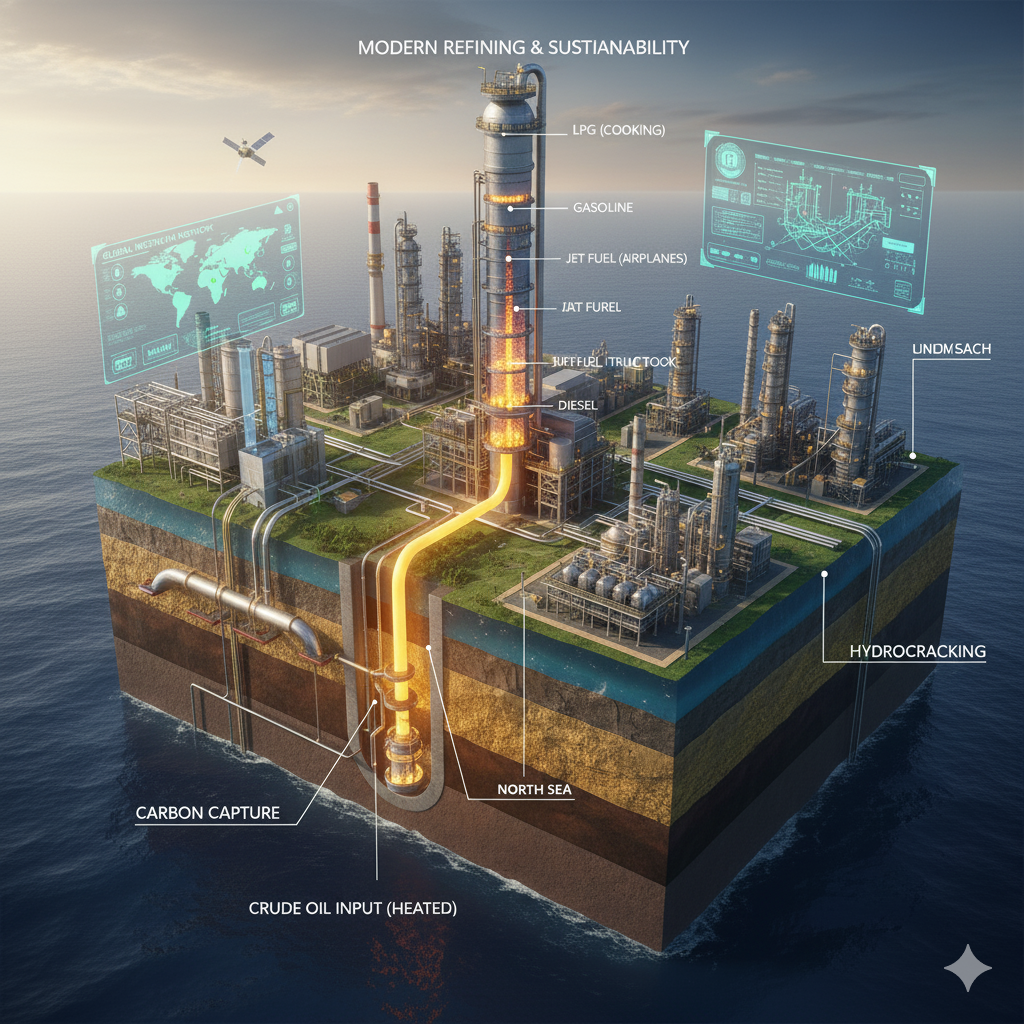
Here’s where the real transformation happens.
In refineries, crude oil is heated and separated into useful components through a process called fractional distillation.
Different products come out at different temperatures:
-
- Gasoline (for cars)
-
- Diesel (for trucks and generators)
-
- Jet fuel (for airplanes)
-
- LPG (for cooking)
-
- Asphalt, wax, and petrochemical feedstock
But refining doesn’t stop there. More advanced steps like cracking and reforming break heavy molecules into lighter ones, improving fuel quality and yield.
Modern refineries also invest in cleaner technologies such as hydrocracking and carbon capture, helping to reduce emissions and meet global sustainability goals.
6. Distribution: From Refineries to Consumers
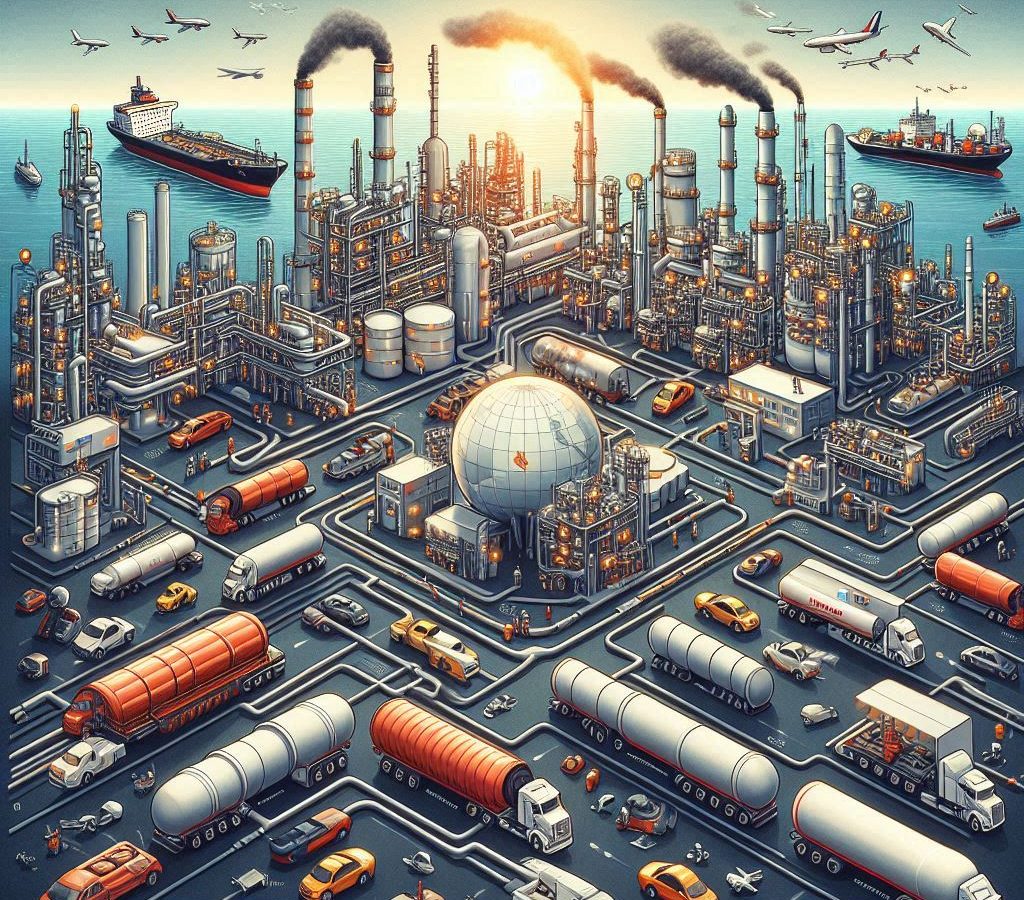
After refining, the products enter the distribution and marketing stage — also known as downstream operations.
Fuel is transported via pipelines, trucks, or ships to terminals, storage tanks, and finally to gas stations and airports.
At this point, trading and pricing play a huge role. Global benchmarks like Brent Crude and WTI (West Texas Intermediate) determine oil prices that influence economies worldwide.
Oil and gas aren’t just commodities; they are the lifeblood of global trade, transportation, and growth.
7. The Future: Cleaner, Smarter, and More Efficient
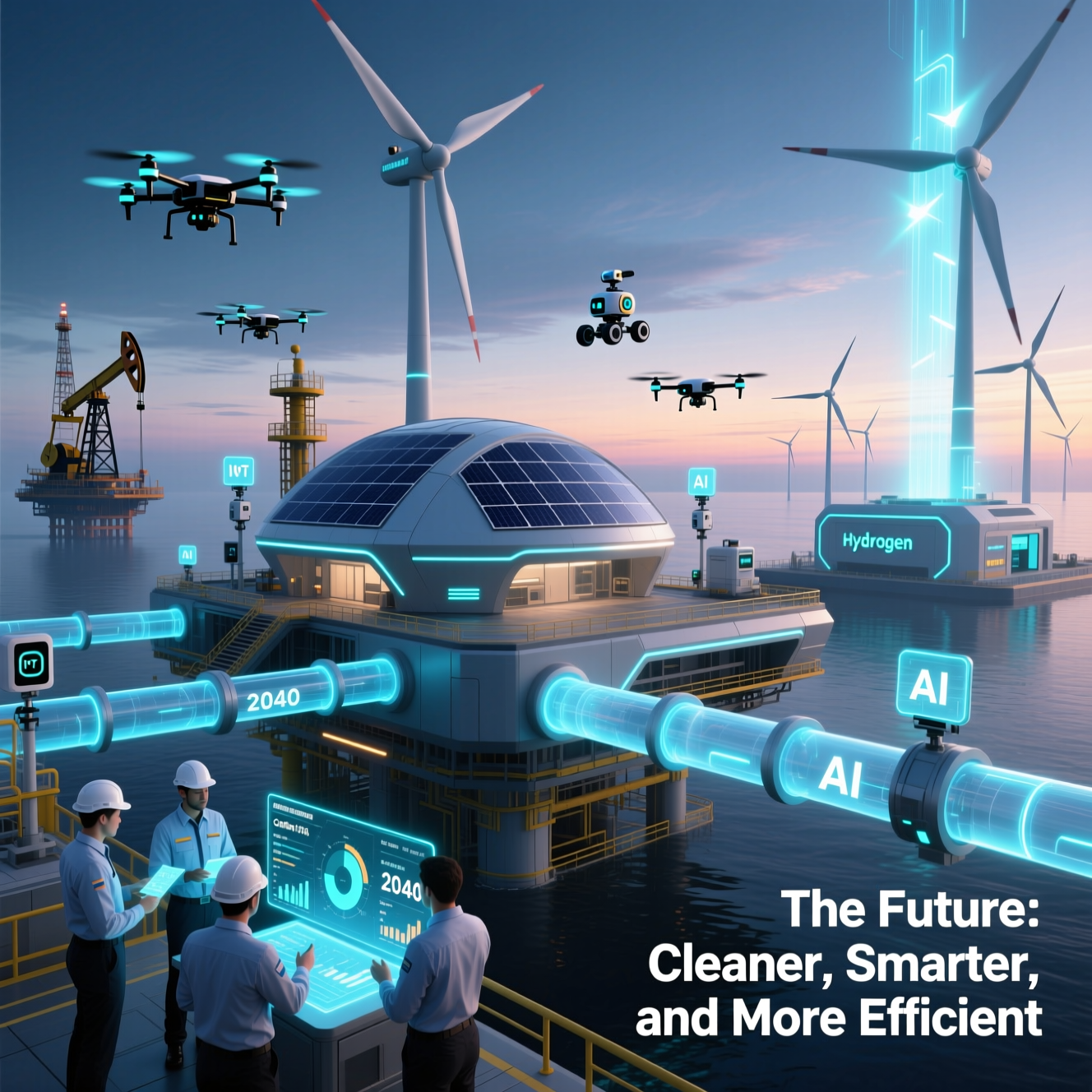
The world is changing — and so is the oil and gas industry.
Companies are investing heavily in digital transformation, using AI, IoT sensors, and predictive analytics to improve safety and performance.
At the same time, there’s growing focus on renewable energy and decarbonization. Natural gas, for instance, is seen as a “bridge fuel” in the transition from oil to cleaner energy sources like hydrogen and wind.
The industry of the future will be a hybrid energy ecosystem, where oil and gas continue to play a role, but in a smarter and more sustainable way.
From Well to Wheel
From the moment oil is discovered deep beneath the earth, to the moment it fuels your car, it travels through one of the most complex and fascinating supply chains on the planet.
The oil and gas industry may be old — over a century in the making — but it’s far from outdated. It c